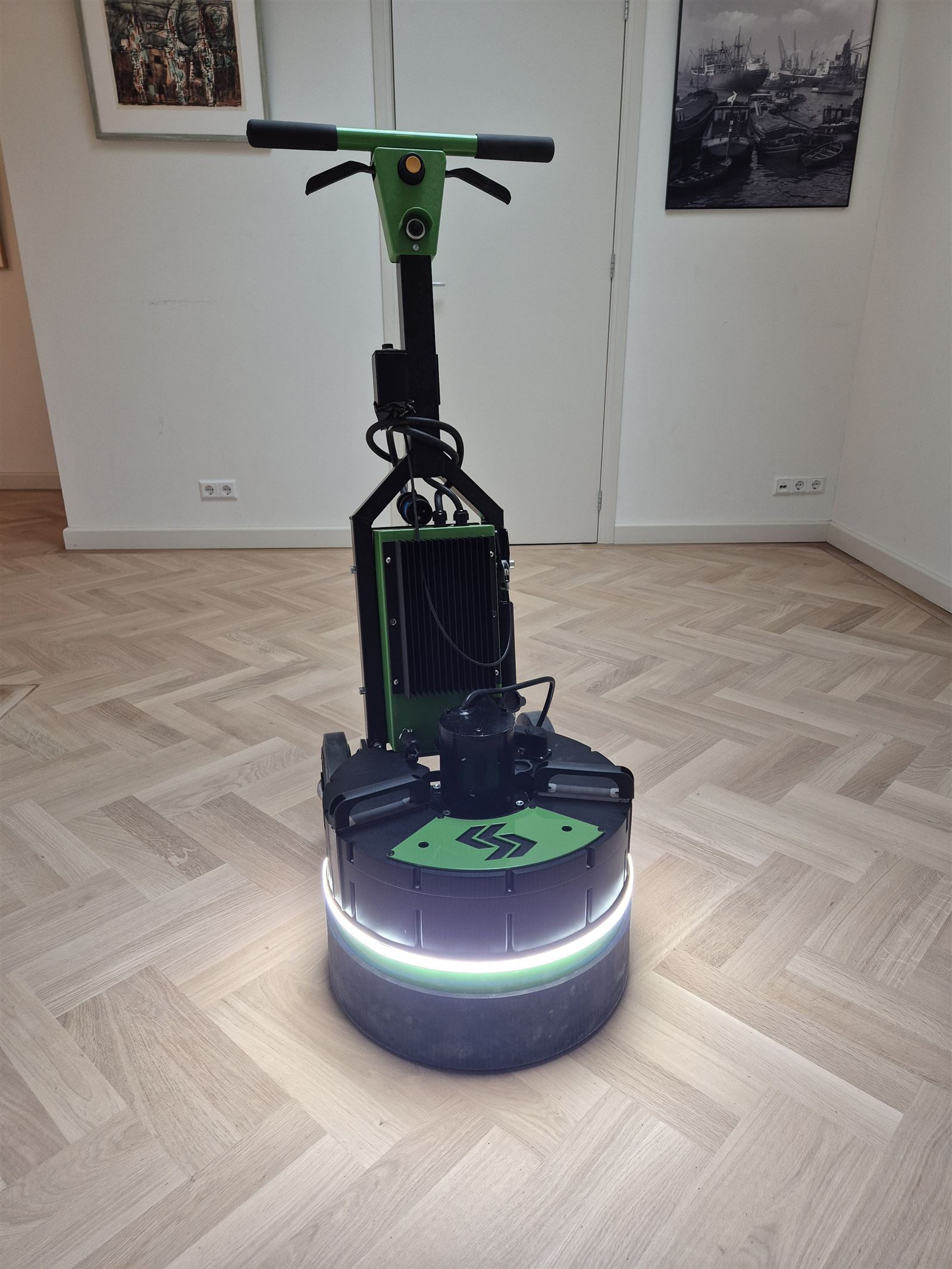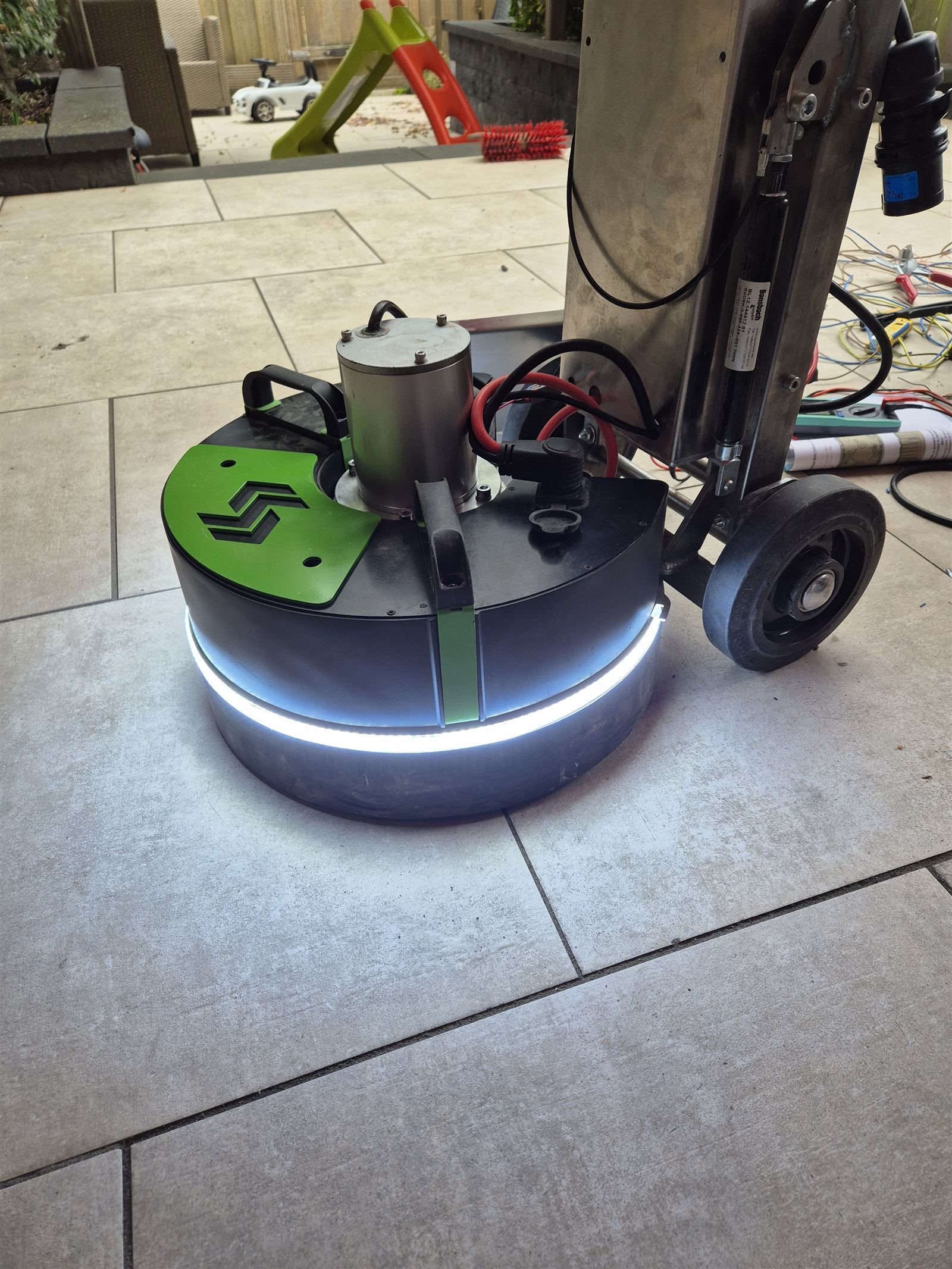
The Kiwi platform is made for compact professional machines that press a tool onto a floor: sanders, grinders, scrubbers, trowels. Machines where the battery's weight can do useful work, and where a cord or a lead-acid set is the last thing holding the design back.
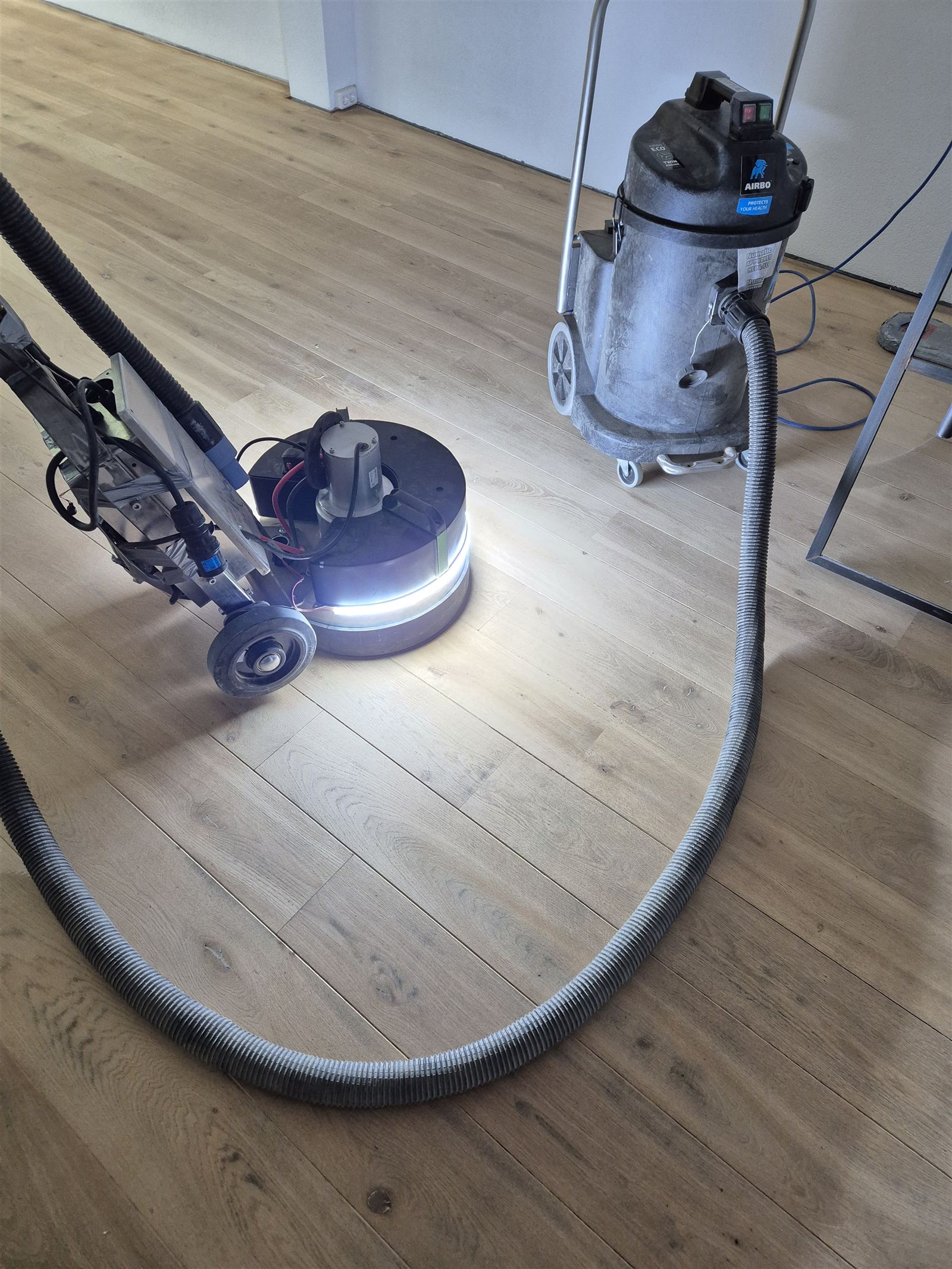
Single-disc and planetary machines for wood, stone and concrete floors are where the platform was born and where it has been proven under real load. To our knowledge, no major floor-sanding brand offers a cordless professional machine today. The first OEM that does will sell the one thing every parquet contractor asks for: no cord over the finished floor.
Typical drives: 1500 rpm motor with standard 1:10 reduction for single-disc machines (150 rpm at the disc), 3000 rpm for geared planetary heads.
Same pack, same motor family, same CAN interface. Three machine categories where the platform replaces what limits the machine today.
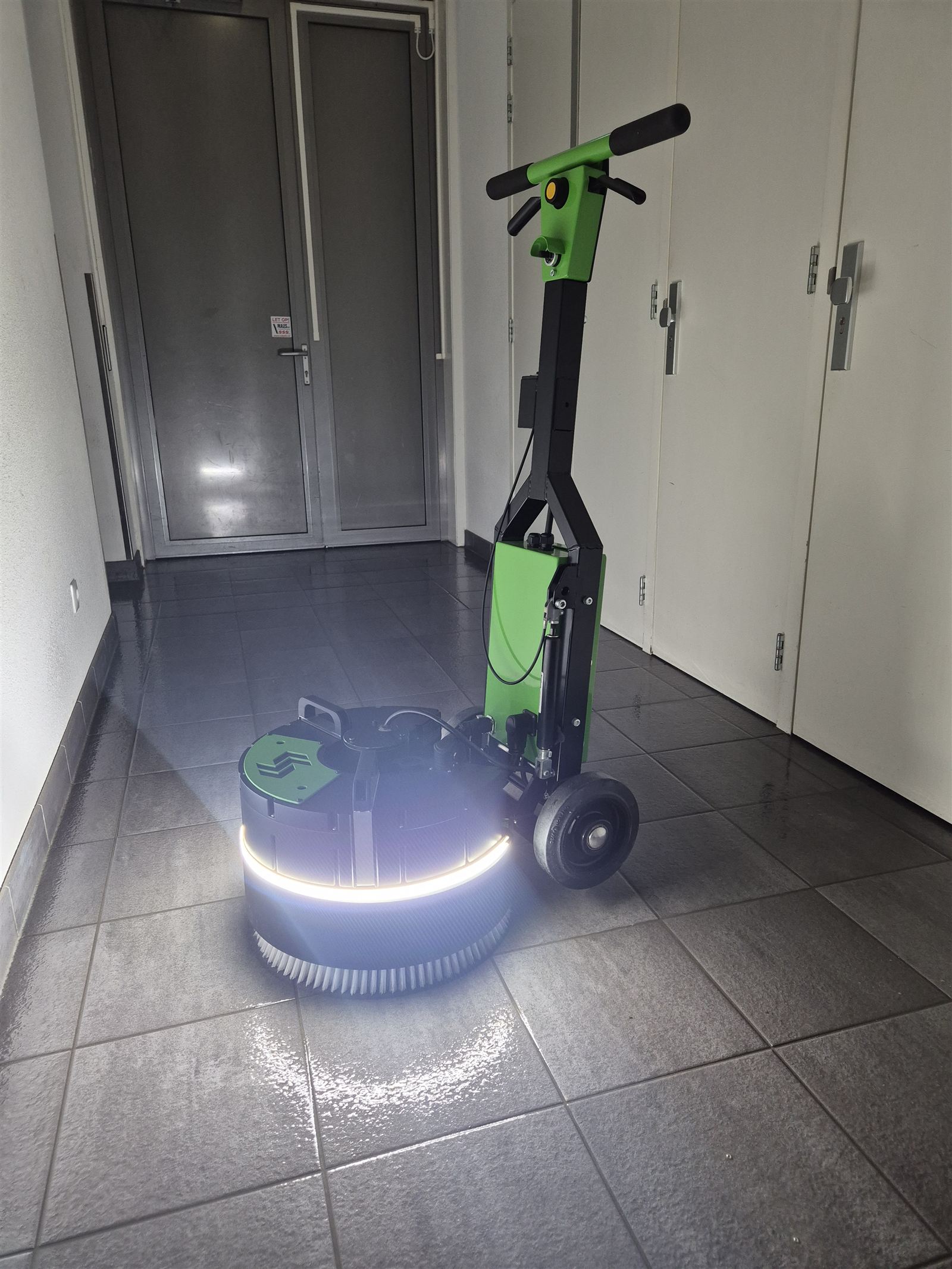
Most single-disc scrubbers still carry 24 V lead-acid sets. LFP stores several times the energy per kilogram, tolerates opportunity charging and needs no maintenance; the market leaders have already moved their large machines to lithium. The Kiwi 1500 rpm motor drives a single-disc scrubber head through a standard 1:10 reduction, and the pack's weight becomes brush pressure.
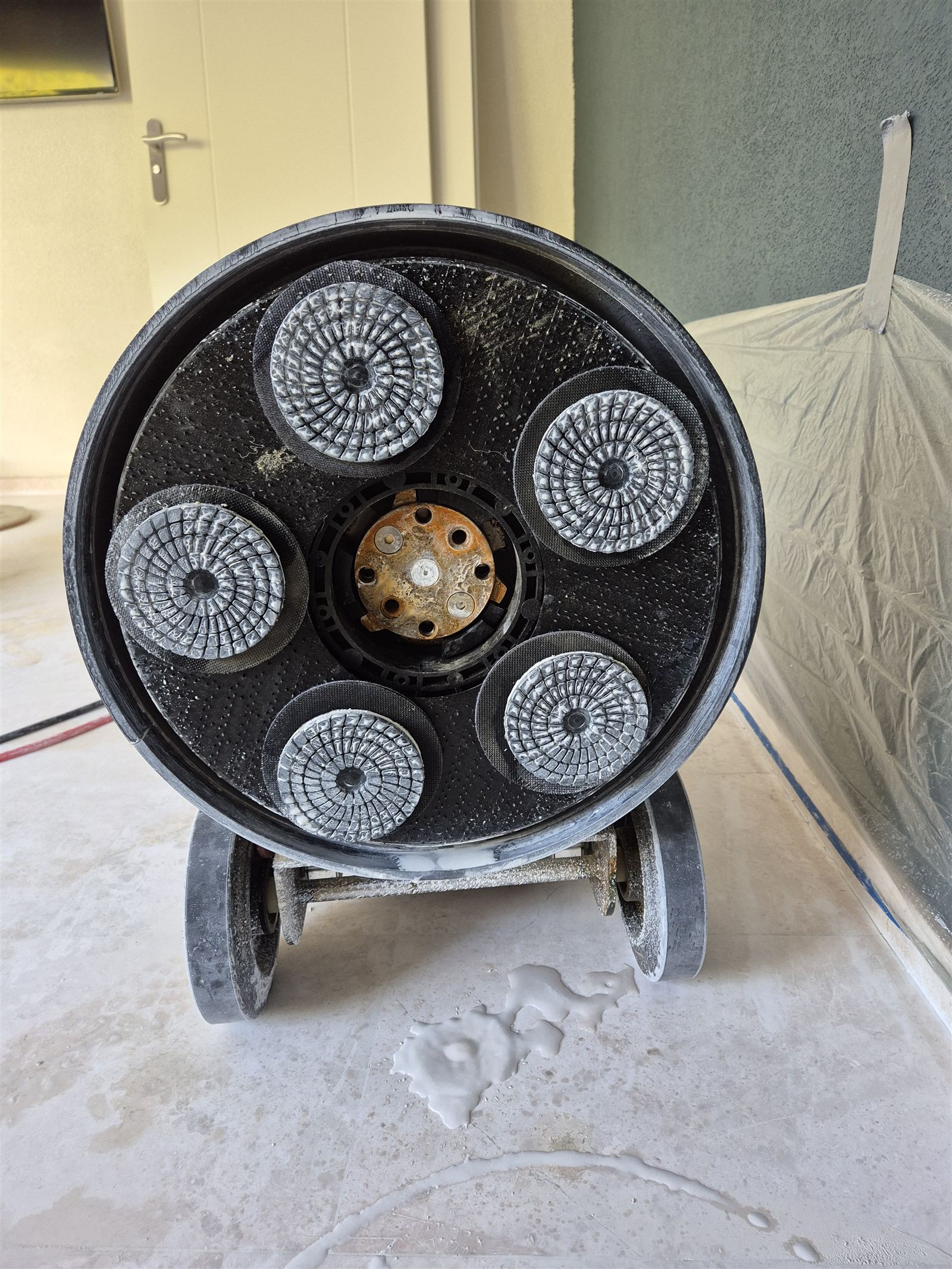
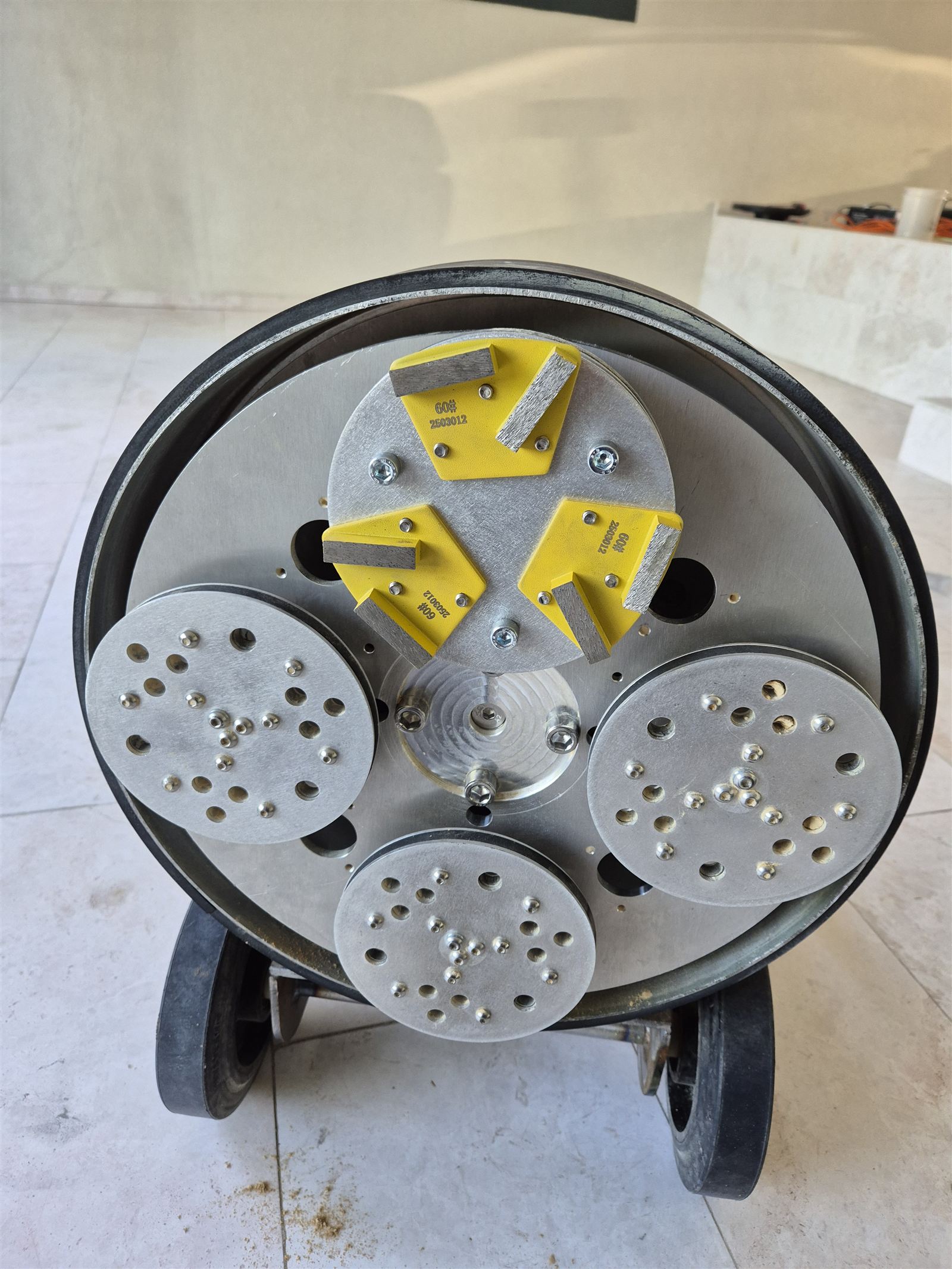
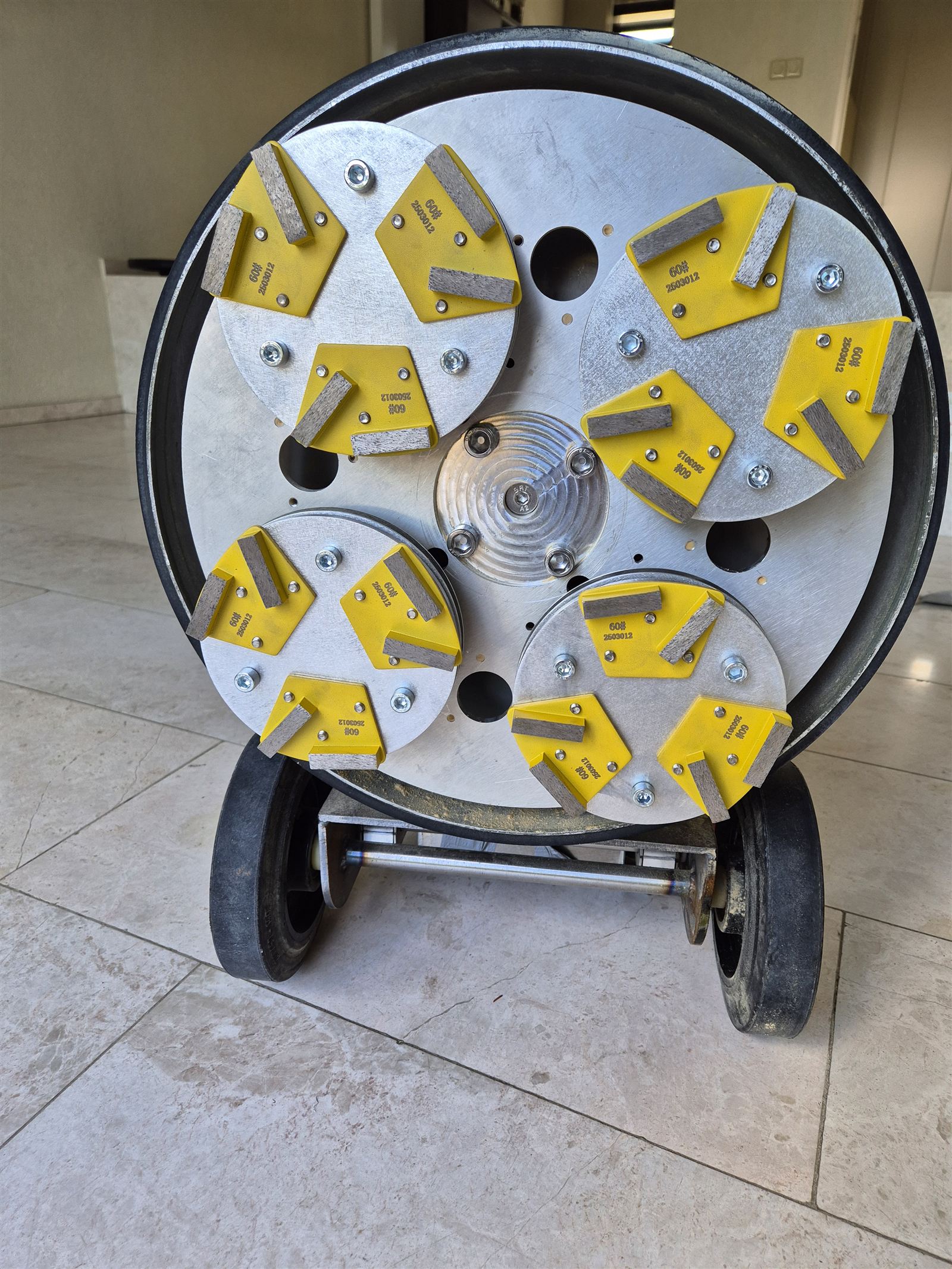
Compact stone grinders run their heads at roughly 940 to 1450 rpm, so the 1500 rpm motor can drive them directly, without a gearbox. Head pressure is the whole job in stone grinding, which makes the horseshoe pack a natural fit: weight on the head, balance unchanged, centre free for water and slurry handling.
Cordless trowels exist, so here the platform competes on integration rather than novelty: pack weight as blade pressure, one CAN bus for machine and pack, and a 48 V system that stays below 60 V DC. The 3000 rpm motor with a geared drive suits walk-behind trowels; the 1.0 kWh pack targets lighter tools.
Other compact machines that work through their own weight, from scarifiers to burnishers, are assessed case by case. Book a fit check and we tell you within a week whether the platform fits.
We build on this platform ourselves. These are working Kiwi prototypes on real jobs in and around Dordrecht: wood, natural stone, concrete and tile. Not renders, not lab benches.